
Helping product leaders in a global mining company to become more user-centred & product-led
How my coaching and strategy services shaped product and design capability at a global mining company.
Image credit: David Knudsen, Unsplash
As a result of this work we achieved:
80% increase in team’s product confidence
dismantled long-held beliefs and organisational barriers to embedding user research
shift from ‘telling’ to ‘showing’ through demos and prototypes
“I am especially proud of the fact that we were able to implement the core principles of the product operating model whilst being pragmatic”
My client was a global mining company that produces metals and minerals essential to modern life, including copper, platinum, diamonds and iron ore. It operates across the mining value chain, with a focus on sustainable practices, innovation and responsible resource development.
At the time of this work (2023–2024), the client’s Digital and Innovation portfolio included 5+ teams responsible for the company’s digital products. These products supported commodity trading, quantitative decision-making, sustainability monitoring, supply chain management and more.
My role
The Head of Digital’s task was to improve commercial outcomes through digital technology. This involved moving towards more collaborative, experimental and outcomes-focused ways of working, known as the Product Operating Model. Expected benefits included:
empowered, focused teams
faster delivery
innovation driven by continuous discovery
I worked with product coaches Simon Pearson and Nick Jemetta to provide user-centred design coaching to the leadership team, supplementing their product work.
I was brought in for my adaptability and breadth of experience, to help teams strengthen their user focus as they adopted new ways of working.
“Vero was a fantastic partner because she knows how to make UCD principles pragmatic. This translated to real and tangible value throughout the engagement”
My task
Over a 6-month fractional engagement (1.5 days per week), my role was to:
assess current UCD practice and identify gaps
create a vision for embedding user-centred principles into product strategy
engage teams and leaders in making that shift
The aim was to move from ad hoc user involvement to a more strategic, consistent and evidence-informed approach across the digital portfolio.
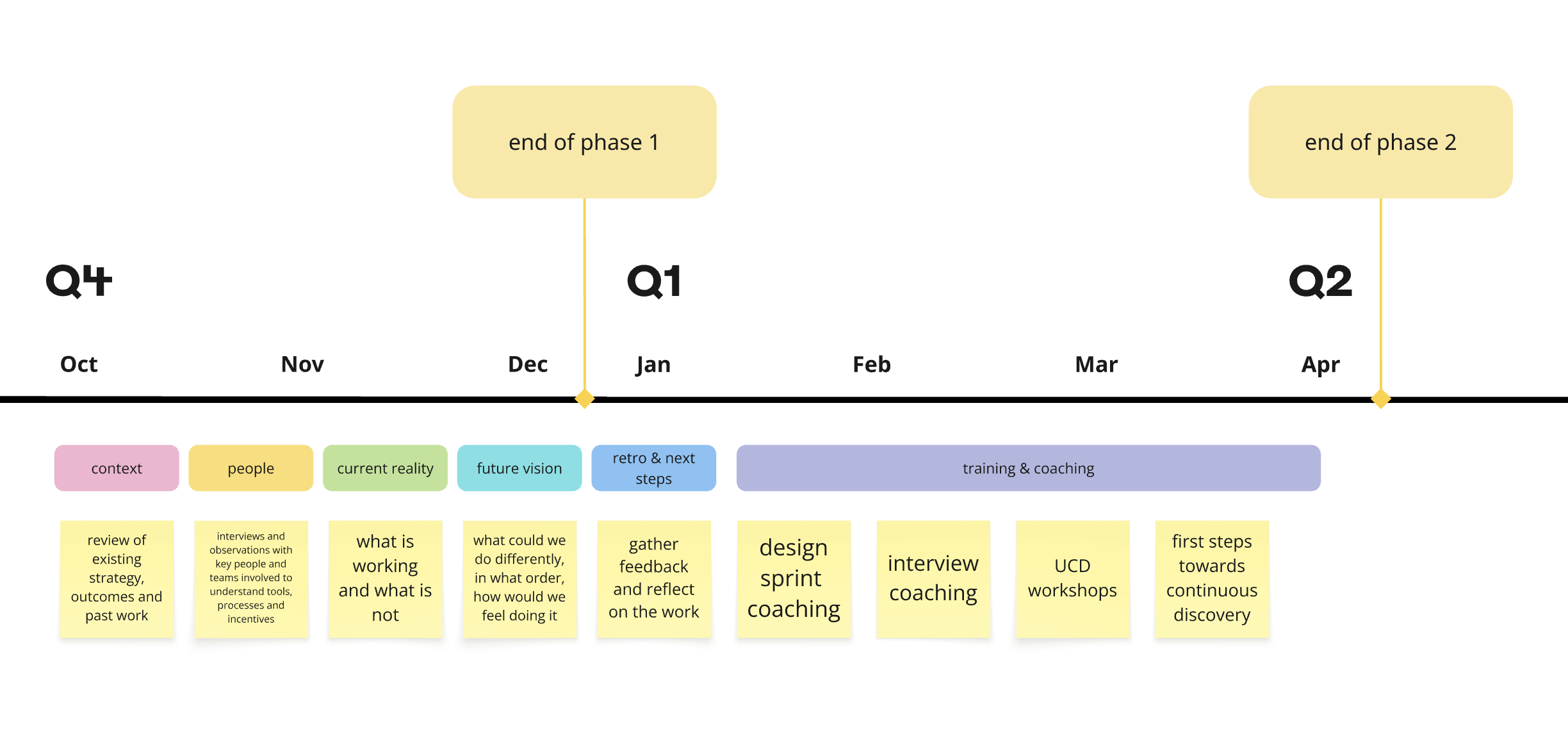
The timeline of work similar to the one I adopted for this project
What I did
Phase 1: Assess and understand
In the first phase, I focused on building a clear picture of current practice. I:
reviewed the existing strategy, team plans and other key artefacts
interviewed product managers, leaders, and other team members across the portfolio
summarised my findings in a clear, concise and actionable report, which I presented to the leadership team
This allowed me to:
surface examples of good practice
reveal the blockers to more consistent user-centred working
inform a tailored strategy for change
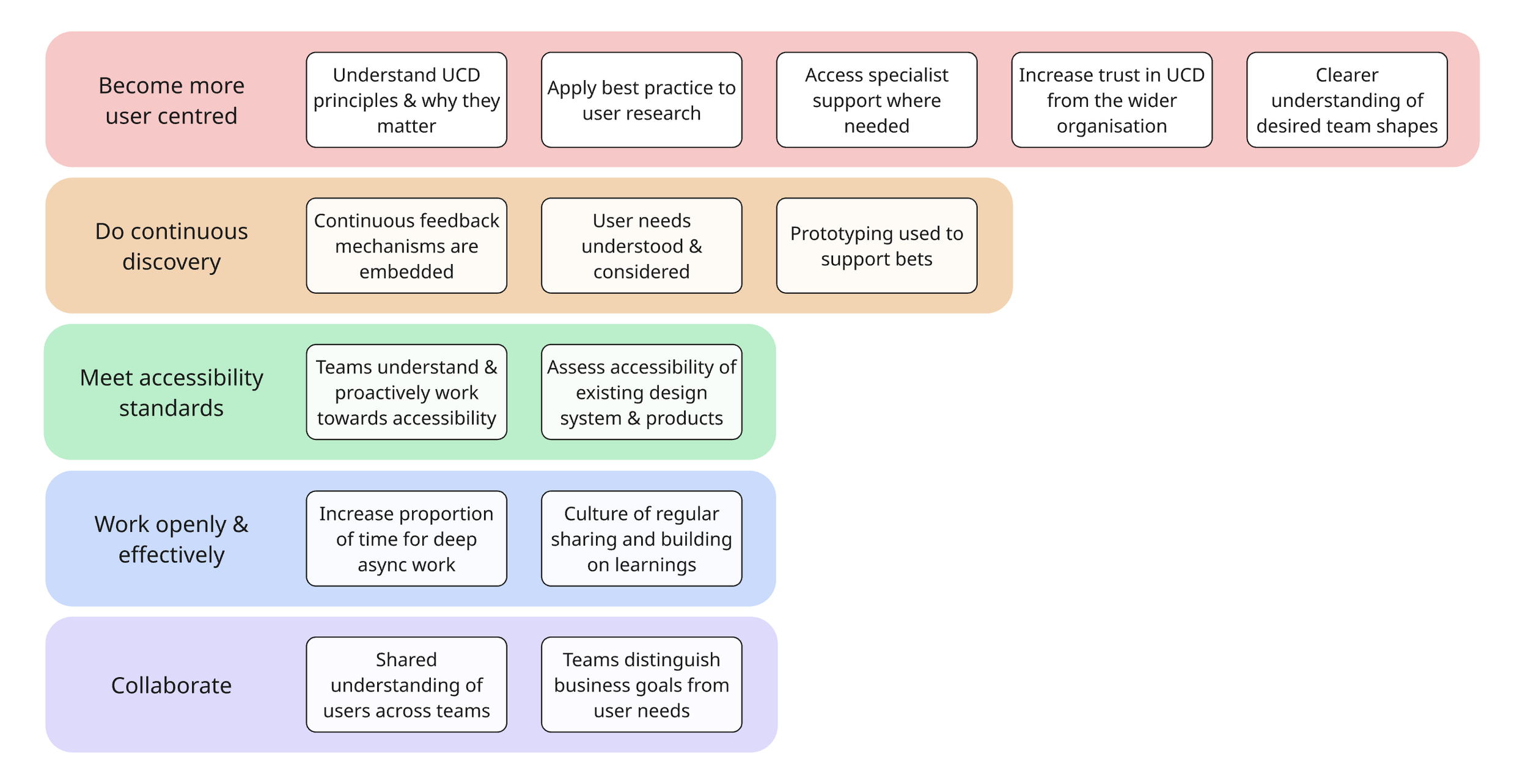
Strategy on a slide, similar to the one I produced, each line representing the desired impact, with corresponding outcomes running alongside it.
Phase 2: Transition to continuous discovery
In the second phase, I:
gathered feedback from teams on the findings and proposed direction
designed and ran lightweight interventions to improve ways of working
coached individuals and teams through live work, modelling and supporting new behaviours
These activities helped build momentum, strengthen trust and embed more user-centred thinking into everyday product decisions.
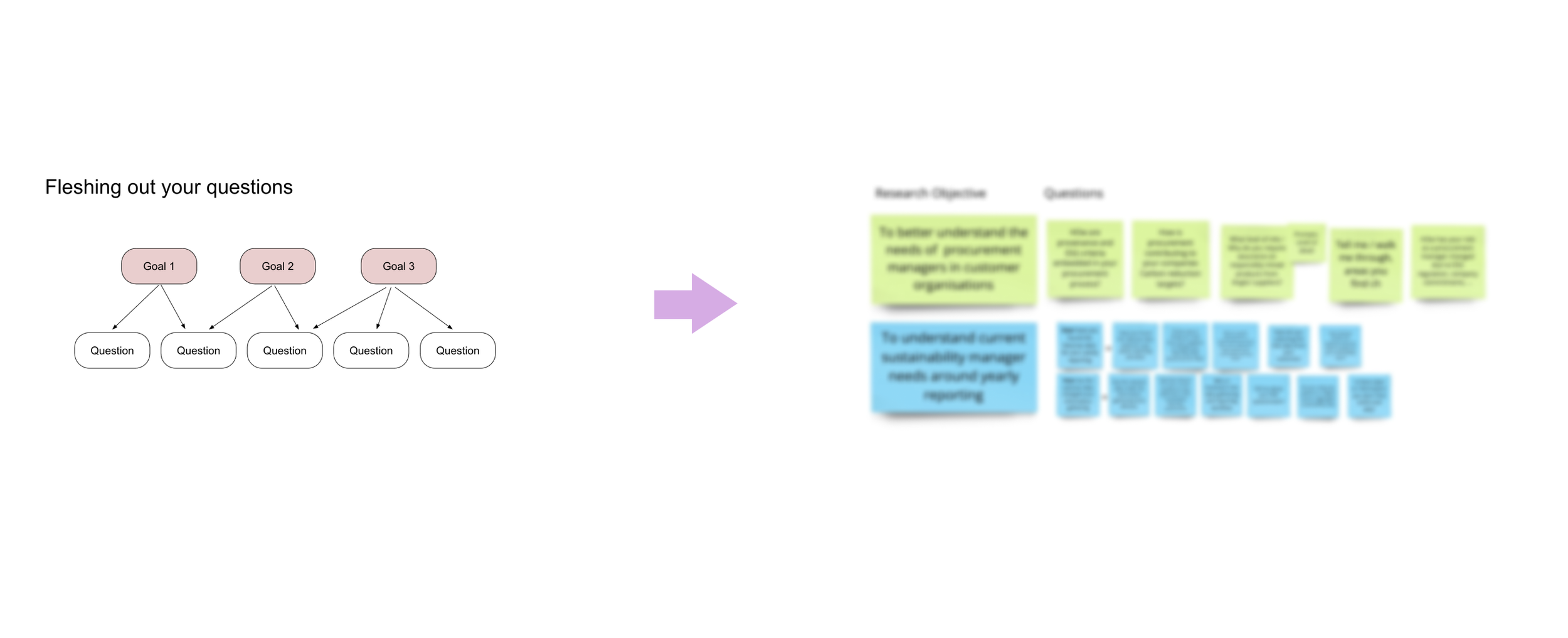
Learning interviewing techniques through practice

Applying product techniques in user-centred ways in collaboration with Product Coach Nick Jemetta
“We’ve just had our first user interview which is a massive step forward”
Building trust through doing
Buy-in wasn’t immediate or universal. One of our early challenges was to build trust with teams and demonstrate, through practice, the value of product ways of working. Without trust, our work wouldn’t land.
“Going through the design sprint process, we saw the value of constructive tension between disciplines and the value of spending time in the problem space to ensure we build the right thing”
Starting small
We started small, running a single design sprint tailored to the team’s context — including their time constraints and multiple time zones. We reflected throughout, listening closely to how the team were feeling and what was or wasn’t working.
These reflections fed into a short case study that the team co-owned. It helped spotlight early successes and surface valuable learnings in the team’s own words.
Adapting theoretical frameworks to B2B the context
We helped the teams adapt well-known frameworks — such as continuous discovery, design sprints, empathy mapping and the double diamond — to suit their B2B context. Rather than teaching theory, we brought these approaches to life by involving the teams directly in using them.
Examples included:
designing tailored training on user research methods, grounded in their domain
encouraging the team to practise techniques and give each other feedback
coaching them through team’s first end-to-end user research project
This hands-on approach built confidence and helped shift user research from being a specialist task to a shared team capability.
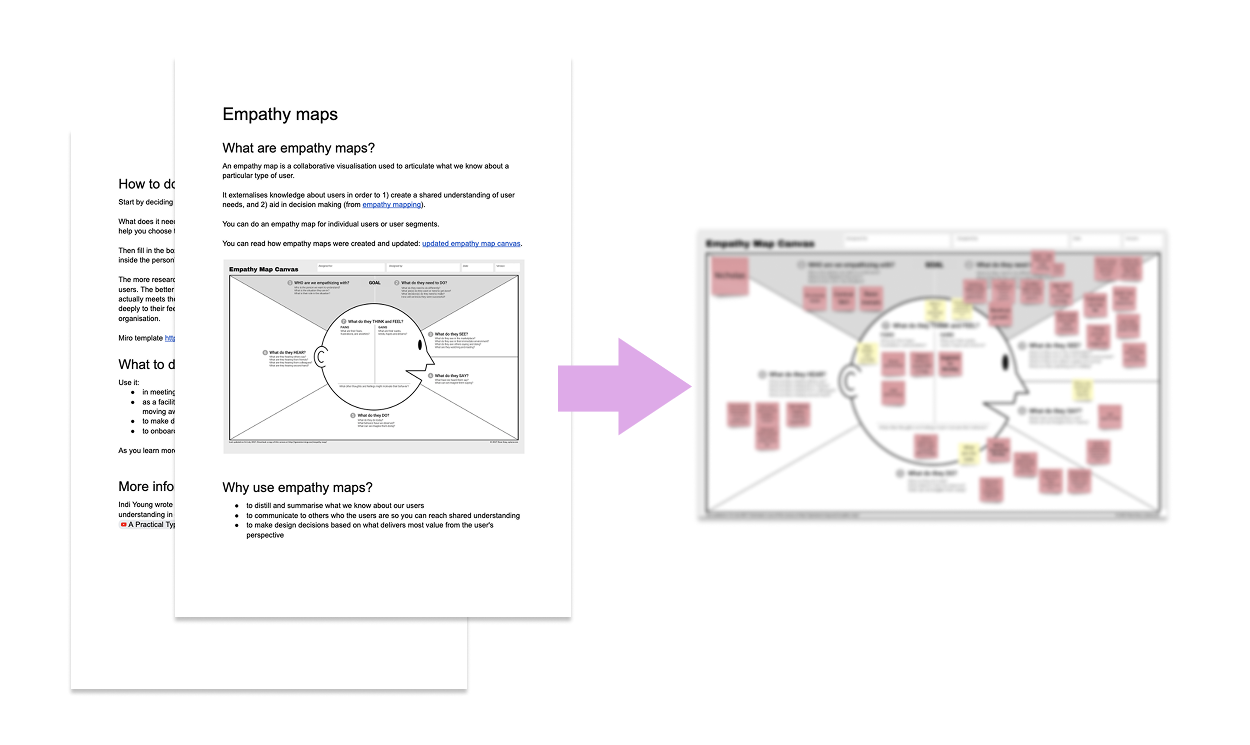
Empathy map, similar to the one we completed as a part of the design sprint
Effective asynchronous working
One of the key blockers to change was a lack of time. As a global business with round-the-clock operations, calendars were full and opportunities for focused work were limited — especially for the leadership team.
Together with the product coaches, we modelled and introduced more effective asynchronous ways of working. These approaches improved visibility and coordination across time zones, while reducing the need for meetings.
Examples included:
introducing a shared Trello board to track progress
writing weekly weeknotes to keep stakeholders informed
measuring and sharing our impact openly
These small changes helped shift the culture — creating space for better collaboration and decision-making, without adding to the team’s workload.
If you’d like to talk about coaching opportunities, get in touch.